You’ve Done Paris. You’ve Done Rome. Poland Will Hit Different – and You’re Not Ready For It
Most Americans who land in Warsaw for the first time do so by accident. A layover that turned into a detour, a family heritage trip that ended up lasting three weeks, a budget flight booked on a whim because it was cheaper than anything going to Prague. Whatever the reason, the ones who actually make it through passport control at Chopin Airport tend to say the same thing on the way out: they had no idea. No idea the food was this good. No idea the cities looked like this. No idea that a country they had barely thought about since high school history class would become the most vivid travel memory of their adult life. Poland is, without exaggeration, the best-kept secret left in Europe. And in 2026, with over 23 million visitors expected to arrive before the year is out – Americans spending five times more on average than any other foreign visitor group – that secret is rapidly getting out.
A Dollar Stretches Further Here Than Almost Anywhere in Europe
Before anything else, let’s talk money. Because for an American traveler in 2026, Poland represents something increasingly rare on the European continent: genuine value. A craft beer in Krakow’s Kazimierz district runs about $2.50. A full sit-down dinner in a traditional restaurant – soup, main course, dessert, a glass of wine – will rarely exceed $20 per person. A night in a well-reviewed four-star hotel in Warsaw’s city center can be found for $80 to $120, even during peak summer season. Compare that to Paris, where that same hotel category starts at $250 before breakfast, or Amsterdam, where a decent hostel bed will set you back $60 alone.
The Polish złoty has kept Poland affordable in ways that other formerly “budget” European destinations like Prague and Budapest no longer manage. American tourists spend on average five times more in Poland than visitors from neighboring countries – not because they’re reckless, but because the dollar buys so much that even spending freely feels reasonable. A weekend in Gdańsk – flights from Warsaw, two nights in a beautiful Old Town hotel, three restaurant meals a day, museum entries and one boat trip on the harbor – can be done for under $400 per person. That is not a typo.
This also means Poland rewards slow travel. You don’t need to rush through cities to make the math work. You can sit at a café on Krakow’s main market square – the largest medieval market square in Europe, incidentally – and drink coffee for two hours without watching the bill climb toward something painful. That kind of unhurried freedom is increasingly hard to find in Western Europe, and Americans who discover it tend to book return flights before they’ve even unpacked at home.
Warsaw Was Rebuilt From Zero. That’s the Whole Point
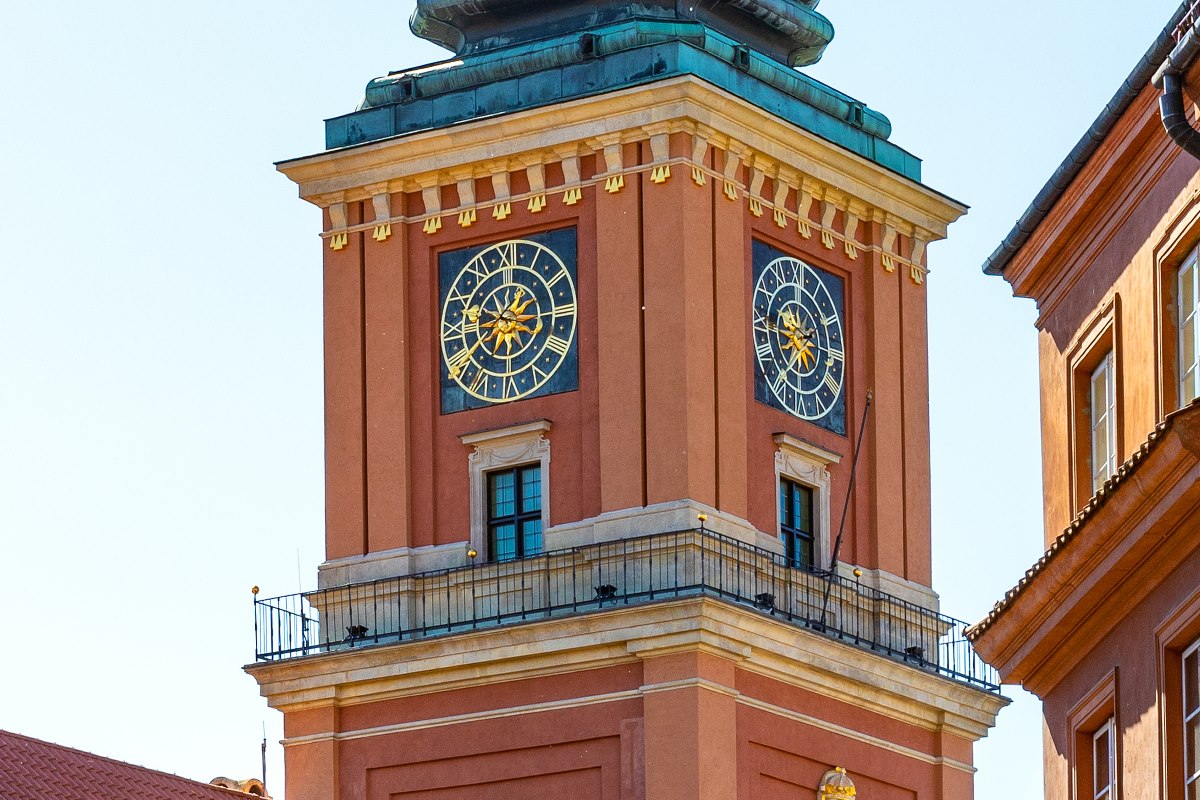
When the Second World War ended, Warsaw was gone. Not damaged – gone. The Nazis systematically destroyed 85 percent of the city after the Warsaw Uprising of 1944, block by block, building by building, as an act of deliberate annihilation. What you walk through today in the Old Town is a painstaking reconstruction, rebuilt from 18th-century paintings by the Italian artist Bernardo Bellotto, who had painted Warsaw’s streets in such precise detail that they became the blueprint for reconstruction two centuries later. The result earned UNESCO World Heritage status – not for being ancient, but for being the most complete and deliberate act of urban resurrection in history.
This backstory changes how you experience Warsaw. Every cobblestone in the Old Town Market Square carries the weight of a choice someone made: to rebuild rather than abandon, to remember rather than erase. The Warsaw Rising Museum, one of the finest history museums in Europe, does something no American war museum quite manages – it puts you inside the experience of civilians who fought for a city they knew was probably already lost, and makes you feel the impossible arithmetic of heroism without victory. Most visitors spend two hours inside and come out unable to speak for a while.
But Warsaw is not trapped in its past. The city’s Praga district, once gritty and neglected east of the Vistula River, has quietly become one of the most interesting neighborhoods in Central Europe – full of art galleries, cocktail bars, street art and independent music venues housed in converted Soviet-era factories. The same country that preserved every Gothic arch of its medieval cities is also producing some of the most dynamic contemporary architecture on the continent. Walking between these two worlds in a single afternoon is one of the things Warsaw does better than anywhere else.
Krakow Is What Everyone Thinks Florence Is
Florence is beautiful. It’s also exhausted – overcrowded, overpriced and increasingly organized around the needs of tourists rather than the life of a real city. Krakow has everything that made Florence famous – medieval architecture, world-class art collections, a university atmosphere, river walks, the smell of good food coming out of every alley – and almost none of the dysfunction that comes with managing 13 million tourists a year. Krakow still feels like a city that belongs to the people who live there. The students from Jagiellonian University, one of the oldest universities in the world founded in 1364, fill the market square bars at night. Locals argue over coffee. Kids ride bikes through the Jewish quarter of Kazimierz.
Wawel Castle, sitting on a limestone hill above the Vistula, is the kind of fortress that makes you forget you’re looking at something real. Dragons and kings and centuries of conquest all compressed into one impossibly dramatic hilltop site. The cathedral next to it contains the tombs of Polish kings, queens and national heroes in an arrangement so dense with history that a Polish visitor once told me it was like being inside the country’s collective memory made stone.
Kazimierz – the old Jewish quarter – deserves its own paragraph. Before the Second World War, Krakow had one of the largest and most vibrant Jewish communities in Europe. The neighborhood today holds both the weight of what was lost and a genuine, living cultural revival: Jewish restaurants, klezmer music played in courtyards on summer evenings, a food truck scene that mixes traditional Polish with Israeli and Middle Eastern influences. It was also the location where Steven Spielberg filmed much o

Economic journalist and legal writing specialist, formerly a lecturer at the University of Warsaw. She focuses on economic news and legal analysis, holding a degree in legal and economic translation. She leverages her academic background in her daily editorial work, producing precise, data-driven articles. As one of the few journalists in the field, she works directly with foreign financial reports and legal acts, ensuring primary-source accuracy without intermediaries.